

Photorealistic Lighting z-image-turbo-flow-dpo
Model Information
Z-Image-Turbo Photorealistic Lighting & Shadows LoRA (Flow-DPO)
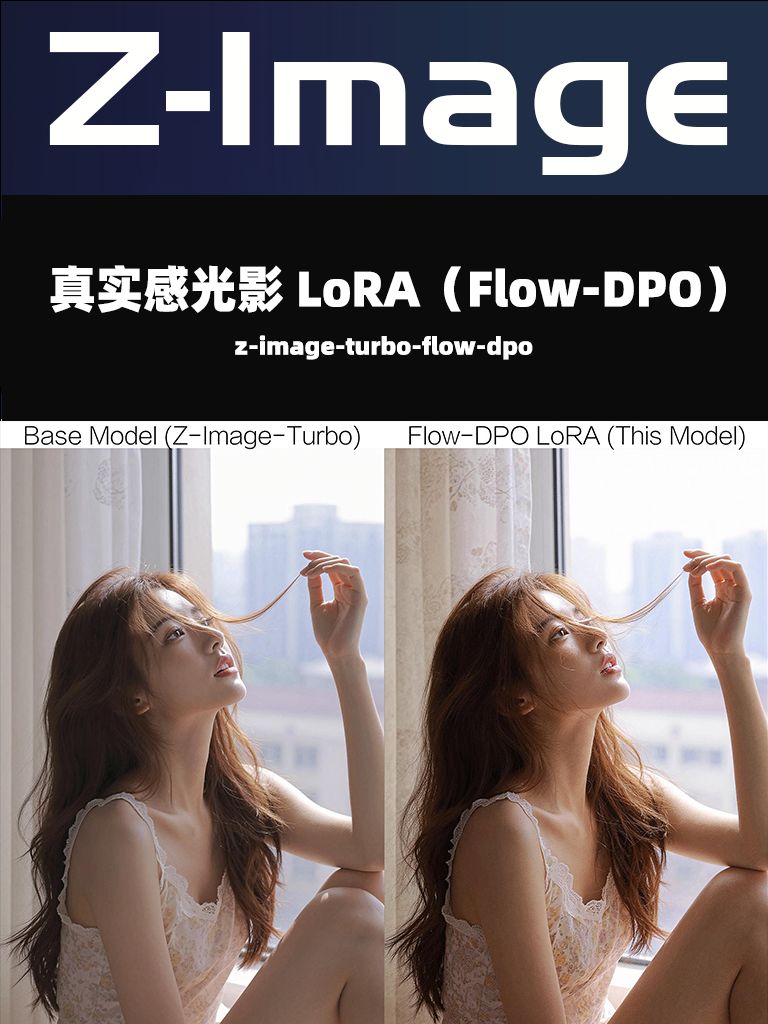
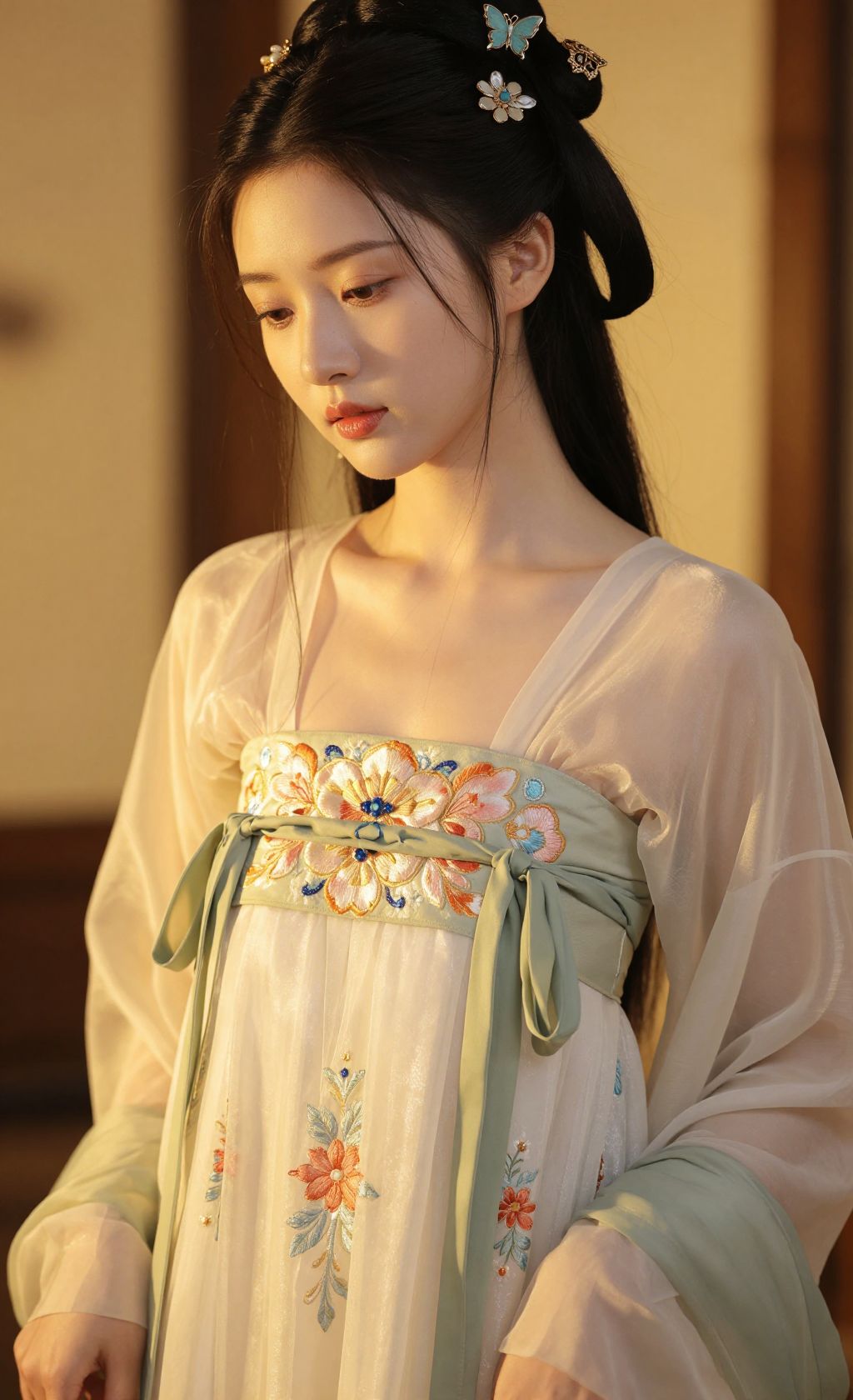
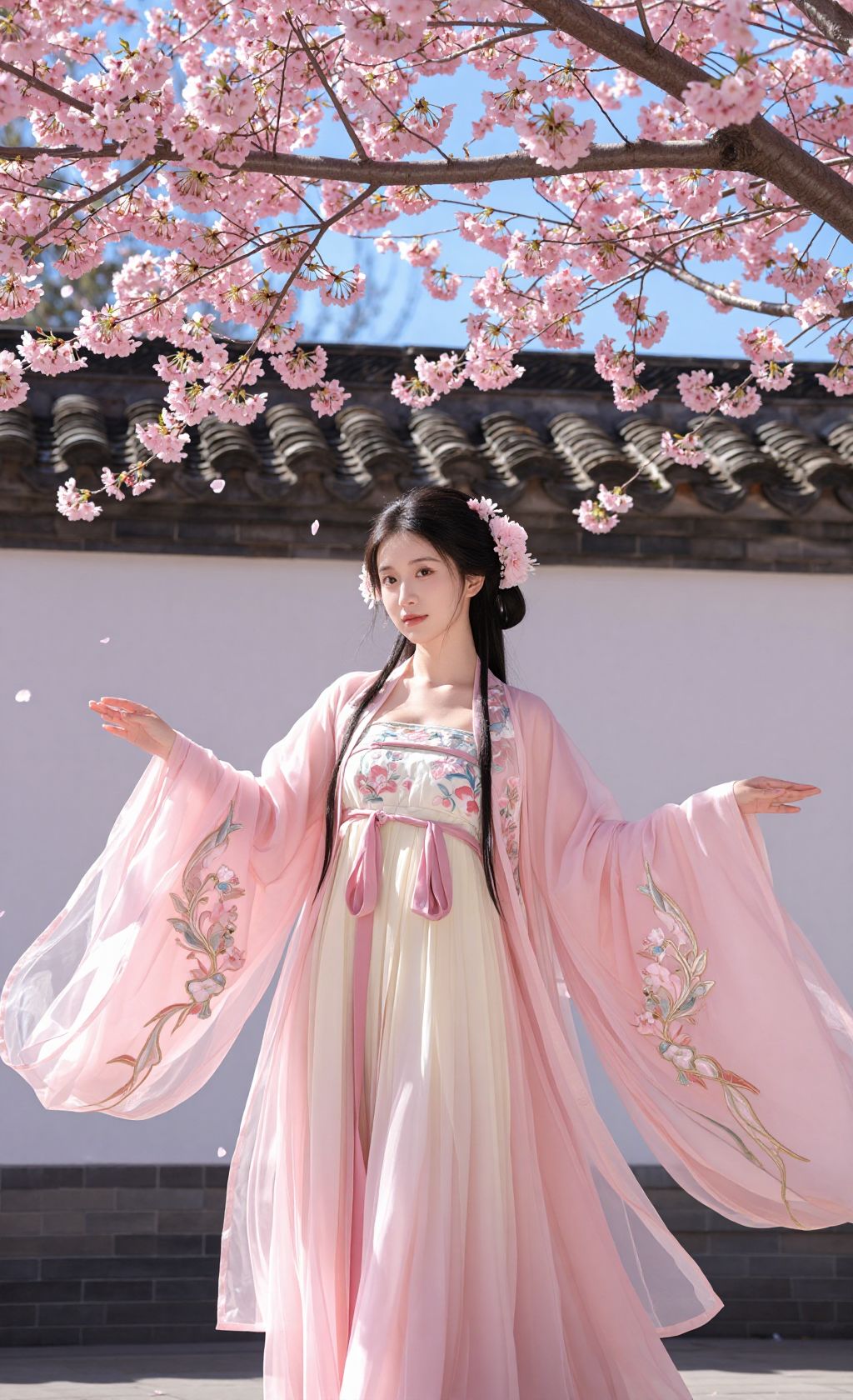
This is a LoRA adapter specifically designed for Alibaba-Tongyi/Z-Image-Turbo, fine-tuned using Flow-DPO (Direct Preference Optimization for Flow Matching) to significantly enhance photorealistic lighting, cinematic shadows, and overall image quality.
By applying Flow-DPO on spatially strictly aligned image pairs, this LoRA effectively resolves artifacts common in ultra-fast distillation models such as "flatness," "overexposure," or "plastic look," generating stunning and physically accurate lighting effects in just 8 inference steps.
Training Details & Methodology
The model was trained using a custom implementation of Flow-DPO (Improving Video Generation with Human Feedback, arXiv:2501.13918).
1. Dataset (Strictly Spatially Aligned)
To prevent the model from hallucinating or altering image structure (catastrophic forgetting), the preference dataset was constructed using strict spatial alignment:
Chosen: High-quality professional photography with perfect lighting, shadows, and textures.
Rejected: Programmatic degradation applied to the exact same images (Gaussian blur, reduced contrast, extreme exposure shifts, Gaussian noise, and severe JPEG compression artifacts).
Alignment: No cropping or warping operations were performed, ensuring that the flow matching trajectory only learns to correct lighting and textures.
2. Discrete Timestep Distillation Preservation
Unlike continuous sampling timesteps $t \in [0, 1]$ in standard diffusion models, Z-Image-Turbo is a distillation model specifically optimized for 8 fixed timesteps.
During Flow-DPO training, we dynamically extracted the precise discrete $t$ distribution from FlowMatchEulerDiscreteScheduler and strictly restricted random sampling to these 8 nodes. This ensures that LoRA maintains the extreme speed of the Turbo model without causing output blurriness.
3. Hyperparameters
Base Model: Alibaba-Tongyi/Z-Image-Turbo (6B Single-Stream DiT)
Learning Rate: 1e-4
KL Penalty ($\beta$): 1.0
Effective Batch Size: 1
Limitations
Not an Image-to-Image Restorer: This LoRA modifies the prior distribution of text-to-image generation. It is designed to generate better raw images from text prompts, rather than acting as an img2img filter to repair user-uploaded low-quality photos (unless combined with RF-Inversion technology, which is highly unstable in 8-step models).
Color Saturation
If the LoRA weight is too high (e.g., > 1.5), the DPO boundary maximization property may cause the image to become overly sharpened or saturated. For the best photorealistic results, keep the weight in the range of 0.6 - 1.0.
Z-Image-Turbo Photorealistic Lighting & Shadows LoRA (Flow-DPO)
This is a LoRA adapter specifically designed for Alibaba-Tongyi/Z-Image-Turbo, fine-tuned using Flow-DPO (Direct Preference Optimization for Flow Matching) to significantly enhance photorealistic lighting, cinematic shadows, and overall image quality.
By applying Flow-DPO on spatially strictly aligned image pairs, this LoRA effectively resolves artifacts common in ultra-fast distillation models such as "flatness," "overexposure," or "plastic look," generating stunning and physically accurate lighting effects in just 8 inference steps.
Training Details & Methodology
The model was trained using a custom implementation of Flow-DPO (Improving Video Generation with Human Feedback, arXiv:2501.13918).
1. Dataset (Strictly Spatially Aligned)
To prevent the model from hallucinating or altering image structure (catastrophic forgetting), the preference dataset was constructed using strict spatial alignment:
Chosen: High-quality professional photography with perfect lighting, shadows, and textures.
Rejected: Programmatic degradation applied to the exact same images (Gaussian blur, reduced contrast, extreme exposure shifts, Gaussian noise, and severe JPEG compression artifacts).
Alignment: No cropping or warping operations were performed, ensuring that the flow matching trajectory only learns to correct lighting and textures.
2. Discrete Timestep Distillation Preservation
Unlike continuous sampling timesteps $t \in [0, 1]$ in standard diffusion models, Z-Image-Turbo is a distillation model specifically optimized for 8 fixed timesteps.
During Flow-DPO training, we dynamically extracted the precise discrete $t$ distribution from FlowMatchEulerDiscreteScheduler and strictly restricted random sampling to these 8 nodes. This ensures that LoRA maintains the extreme speed of the Turbo model without causing output blurriness.
3. Hyperparameters
Base Model: Alibaba-Tongyi/Z-Image-Turbo (6B Single-Stream DiT)
Learning Rate: 1e-4
KL Penalty ($\beta$): 1.0
Effective Batch Size: 1
Limitations
Not an Image-to-Image Restorer: This LoRA modifies the prior distribution of text-to-image generation. It is designed to generate better raw images from text prompts, rather than acting as an img2img filter to repair user-uploaded low-quality photos (unless combined with RF-Inversion technology, which is highly unstable in 8-step models).
Color Saturation
If the LoRA weight is too high (e.g., > 1.5), the DPO boundary maximization property may cause the image to become overly sharpened or saturated. For the best photorealistic results, keep the weight in the range of 0.6 - 1.0.